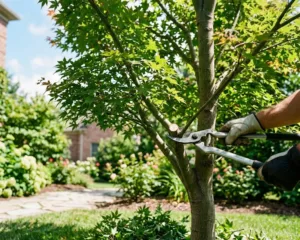
The Master Plan for Your Wesley Chapel Tree Care Guide
Cutting corners on a job leads to rot—literally. Whether you’re staring at a sprawling Live Oak or a backyard citrus, knowing how to prune a tree without killing it is the difference between a thriving landscape and a hazardous mess. At Knuckleheads Tree Service, we’ve spent years in the Florida heat fixing “hack jobs.” We provide the heavy-duty expertise Wesley Chapel homeowners need to keep their canopy strong, safe, and looking sharp through every storm season.
Key Takeaways
- Purge dead or “bleeding” wood to stop decay from traveling into the main trunk.
- Seal the wound naturally by making clean, angled cuts that don’t trap Central Florida humidity.
- Match your steel to the limb size—don’t try to take down a 3-inch branch with hand snips.
- Time your cuts for the dormant winter months to avoid stressing the sap flow.
- Hire a pro when the work gets within ten feet of a power line or hangs over your roof.
Why Real Pruning Is a Life-Saving Skill
Taking a chainsaw to a limb isn’t pruneng; it’s surgery. Proper maintenance supports the tree’s vascular system, ensuring nutrients aren’t wasted on “sucker” growth or dying wood. By thinning out a dense canopy, you’re letting the Wesley Chapel breeze pass through rather than letting the tree act like a giant sail during a summer squall.
The crew at Knuckleheads Tree Service, Inc doesn’t just lop off tops. We show you how to prune a tree so the structural integrity remains rock-solid. Our goal is to balance the weight of the tree, ensuring it doesn’t become lean-heavy and threaten your driveway or your neighbor’s fence.
The Right Steel for the Job
If your tools are dull or undersized, you’re going to tear the bark. Here’s the gear we keep on the truck:
- Pole Saws: Stay on the ground while reaching up to 16 feet to avoid “ladder-and-chainsaw” disasters.
- Bypass Pruners: Slice through small stems up to 3/4 inch like a hot knife through butter.
- Compound Loppers: Use these for the “tweeners”—branches up to 2 inches that need a bit of leverage.
- Arborist Handsaws: Grip a folding saw with tri-edge teeth for those thick, fibrous limbs.

A Tradesman’s Step-by-Step to Pruning
Handling the Small Stuff
Position your blade just above a lateral bud that’s pointing away from the center. You want to cut at a 45-degree slope so the rain runs right off rather than sitting on the raw wood and inviting fungus.
Dropping the Heavy Limbs
- The Undercut: Notch the bottom of the branch about 18 inches out from the trunk to prevent the bark from “stripping” down the side of the tree.
- The Relief Cut: Cut from the top, slightly further out, to let the weight of the limb drop away cleanly.
- The Final Finish: Cut just outside the branch collar (that wrinkled area where the limb meets the trunk) so the tree can callous over properly.
Strategic Crown Thinning
Take out about 10–20% of the growth specifically at the edges. This lets the Florida sun hit the interior leaves without stripping the tree of its natural shape or protection.
Raising the Canopy
If you’re tired of ducking under branches to mow the lawn, start removing the lowest limbs. Just don’t get greedy; taking too many at once can starve the tree of its energy source.
Crown Reduction for Old Growth
On our older Wesley Chapel beauties, we sometimes need to scale back the overall height. We carefully head back the longest leaders to a side branch to keep the tree from getting “top-heavy.”
Crown Cleaning
This is a year-round job. If it’s dead, snapped, or looks diseased, it’s got to go. Keeping a clean canopy is the best insurance policy against property damage.
The Wesley Chapel Seasonal Playbook
- Winter is King: Aim for mid-to-late winter when the tree is “sleeping” to get the best spring rebound.
- Avoid the Fall: Pruning in the autumn can trick a tree into growing new, tender shoots right before a cold snap hits.
- Watch the Bloom: If it flowers in early spring, wait until the petals drop to prune. For late bloomers, hit them in the early spring.
- Know Your Limits: You can handle the ornamentals and fruit trees, but for the 40-foot shade trees, leave the climbing to the experts.
Knuckleheads Tree Service, Inc has the rigging, the saws, and the local experience to show you how to prune a tree without turning your backyard into a construction zone. We treat every property in Wesley Chapel like it’s our own backyard, ensuring your trees are an asset, not a liability.
Conclusion
Mastering the art of how to prune a tree is a fundamental part of homeownership. Whether you’re clearing a path or saving a diseased oak, the right technique keeps your landscape thriving. If the job looks too big or the heights are getting sketchy, Knuckleheads Tree Service, Inc is here to handle the heavy lifting and keep your Wesley Chapel property looking sharp.
Call us today to book a professional assessment or get your pruning scheduled before the next big storm.

Conclusion
Mastering the art of how to prune a tree is a fundamental part of homeownership. Whether you’re clearing a path or saving a diseased oak, the right technique keeps your landscape thriving. If the job looks too big or the heights are getting sketchy, Knuckleheads Tree Service, Inc is here to handle the heavy lifting and keep your Wesley Chapel property looking sharp.Call us today to book a professional assessment or get your pruning scheduled before the next big storm.
Frequently Asked Questions
1. When is the best window for pruning in Wesley Chapel? Target the dormant months, usually between late December and February, before the spring sap starts pushing.
2. Is it safe to prune my own large oaks? We don’t recommend it. Large-scale canopy work involves “widow-makers” and high-tension limbs that require professional rigging for safety.
3. How do I stop rot from setting in after a cut? Stick to the 45-degree rule and never leave “stubs.” A clean cut at the branch collar allows the tree to heal itself naturally.
4. How often should I be out there with the loppers? A quick annual “walk-through” and light pruning is usually enough to maintain health and catch problems early.
5. Do my hibiscus and crepe myrtles need special timing? Absolutely. Prune your early spring bloomers only after they’ve shown off their flowers; otherwise, you’re cutting off next year’s display.