
Protecting your family remains paramount when heavy branches threaten to collapse during severe weather events. This guide from Knuckleheads Tree Service offers gritty, real-world tips concerning managing canopies mid-season before curious residents eventually wonder, can you prune trees in summer?
Unstable limbs dangling above shingles often prompt concerns regarding sudden thunderstorms within this specific coastal region. Waiting until winter dormancy seems incredibly risky while immediate physical intervention helps local vegetation withstand oppressive tropical humidity throughout these warmer months.
Key Takeaways:
- Hazard Removal: Target decayed, broken, or infected timber right away, stopping storm failures.
- Boost Recovery: High-sap varieties such as maples mend quickly while active cycles occur.
- Manage Suckers: Pluck off water sprouts so vital nourishment reaches primary leader boughs.
- Protect Bark: Refrain from excessive thinning which causes sunscald on sensitive inner cambium layers.
Why Is Mid-Season Maintenance Critical for Your Canopy?
Correct maintenance ensures landscapes survive intense periods without becoming dangerous threats. While springtime brings rapid expansion, thick foliage frequently hides underlying architectural flaws. Removing lifeless timber forces plants toward redirecting essential nitrogen plus sugars into robust sections. Such action builds dense, wind-resistant crowns providing cool relief during backyard barbecues.
Essential Steps for Summer Pruning
The Hazard Assessment Phase
Examine elevated areas for widow-makers or parts lacking healthy vascular tissue. Look for intersecting boughs currently grinding through protective exterior coatings.
The Selective Extraction Phase
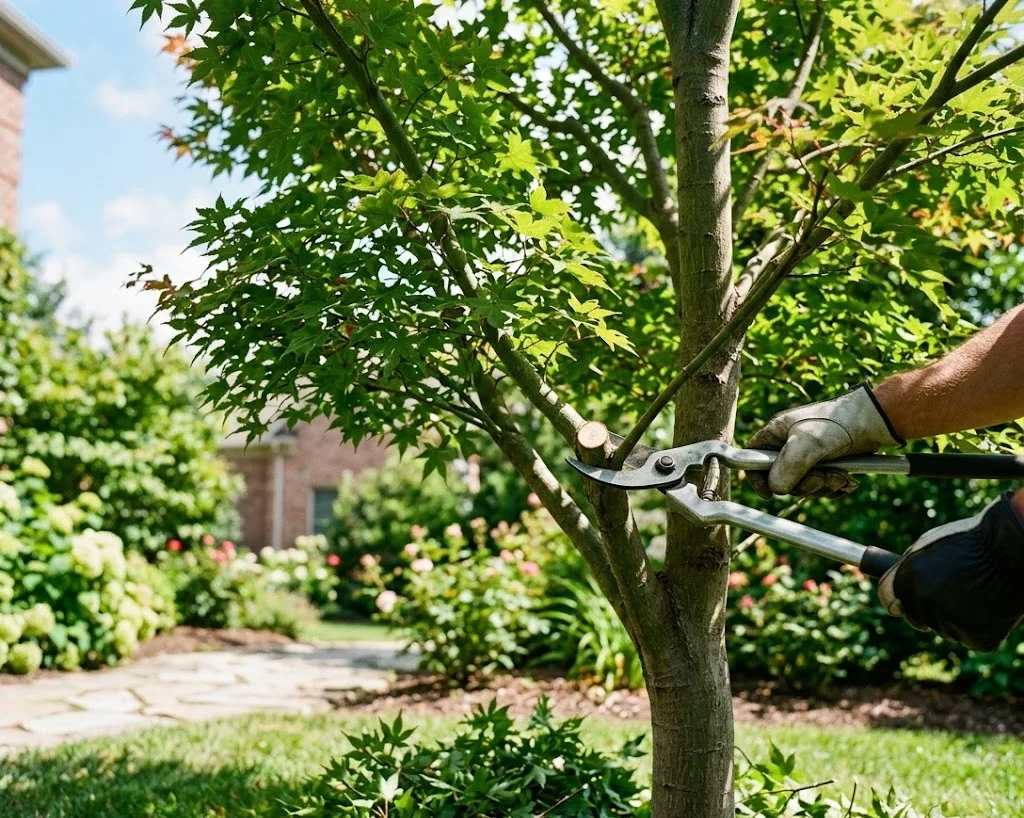
Perform precise snips just beyond the collar to encourage swift sealing. Reduce dense interior growth so high-velocity gusts pass through instead of toppling trunks.
The Hydration & Recovery Phase
Saturate root zones deeply right after taking down substantial heavy limbs. Spread organic mulch layers to stabilize ground temperatures while retaining necessary moisture.
Can You Prune Trees in Summer Without Killing Them?
Specimens might successfully tolerate trimming during hot periods by prioritizing vigor over major overhauls. Many people falsely assume freezing weather must arrive before starting any outdoor projects. Cutting away decay throughout July remains safe because biological systems reach peak metabolic states. This timing lets flora compartmentalize wounds fast, effectively walling off structural openings from fungi or beetles that might otherwise compromise long-term health or interior stability.
Risk Mitigation
- Identify Decay: Search for fungal brackets or conks emerging from central trunks.
- Check Integrity: Strike questionable parts with mallets listening for hollow thuds signaling internal rot.
- Monitor Pests: Observe sawdust-like frass indicating active borer infestations are present.
Technical Execution
- The Three-Cut Method: Employ this strategy on massive sections, avoiding weight-induced bark stripping.
- Sterilize Blades: Submerge saws within ten percent bleach solutions between separate tasks to halt wilt.
- Angle the Cut: Slope each incision away from main bodies so standing water won’t rot wounds.
How Do You Identify Hazardous Limbs During the Growing Season?
Detecting lifeless material is simpler when surrounding foliage stays vibrant green. Dormant appearances characterize winter, yet July leaflessness signals obvious vascular failure. Search for brittle twigs snapping easily alongside surfaces peeling away in dry flakes. Such openings create invitations for hungry insects seeking fresh habitats. Strolling around town after heavy rain reveals which appendages struggle under liquid weight.
Seasonal Pruning Comparison: Summer vs. Winter
| Feature | Summer Pruning | Winter Pruning |
| Visibility | Exceptional; lifeless timber contrasts sharply with verdant leaves. | Limited; necessitates professional eyes distinguishing sleep from demise. |
| Healing Speed | Swift; flowing sap closes gaps quickly. | Sluggish; injuries stay exposed until springtime surges. |
| Growth Impact | Curbs aggressive species significantly. | Stimulates vigorous development once warmth returns. |
| Pest Risk | Average; demands tidy, accurate trimming. | Minimal; destructive bugs stay dormant. |
| Disease Detection | High; spotting spots or wilting becomes effortless. | Scant; needs close inspection of buds. |
How Can You Prevent Sunscald and Heat Stress During a Trim?
Excessive trimming during heatwaves exposes internal layers to lethal sun damage. Sudden removal of large upper portions allows rays to strike previously shaded regions. Resulting cracks or peeling eventually kill tissue, leaving permanent scars. Focus work on peripheral zones while limiting leaf loss to twenty percent maximum per session. This maintains cooler internal temperatures against brutal afternoon sunlight.
Expert Perspective: The “Lutz Humidity” Factor
Novices frequently overlook how high moisture levels elevate fungal infection risks. Florida professionals avoid cutting during or following tropical downpours. Damp fibers tear easily, and trapped wetness creates breeding grounds for rot. Allow twenty-four hours of dry weather before addressing oaks or maples.
What Is the Best Way to Manage Aggressive Summer Suckers?
Properly identifying these fast-growing vertical stems allows you to maintain balance across the entire woody specimen. Aggressive sprouts and suckers behave like parasites, stealing vital nutrients meant for primary canopies to flourish. Thin, vertical shoots typically explode from central trunks following heavy rainfall within the humid Florida atmosphere. These unwanted growths diminish overall aesthetic value while potentially weakening the core structure of your landscape favorites. When residents eventually inquire, can you prune trees in summer, they worry about stunted development, yet removal increases strength.
Essential Summer Pruning Entities
- Branch Collar: The shoulder where limbs meet trunks; avoid cutting this zone.
- Cambium Layer: Living tissue beneath bark moving water plus nourishment.
- Water Sprouts: Rapid vertical shoots indicating stress or excessive trimming.
- Callus Tissue: Biological scabs growing over wounds to protect internal wood.
- Heading Cut: Removing branch tips, often utilized for controlling height.
Which Specific Species Thrive After a Summer Haircut?
Varieties like Maples or Birches are bleeders that actually prefer late-season trims. Spring cutting causes high sap pressure, leading to weeks of leaking fluid and wasps. August maintenance allows these specimens to mend much cleaner. Fruit-bearing vegetation also benefits from light thinning which permits sunlight to reach ripening crops. This increases sugar content while preventing mold growth on future harvests.
Landscape ROI
- Enhance Curb Appeal: Trim wild growth from evergreens to maintain manicured appearances.
- Improve Airflow: Thin dense oak interiors to reduce sail effects during hurricane seasons.
- Promote Fruiting: Remove non-productive citrus wood to boost upcoming yields.
Technical Tools
- Bypass Pruners: Scissor-like implements providing cleanest slices for living tissues.
- Pole Saws: Reach high-altitude hazards while remaining safely on solid ground.
- Tri-Edge Folding Saws: Aggressive patterns designed for slicing through sappy Florida wood.
When Should You Put Down the Shears and Call a Professional?
Trimming young crepe myrtles remains a simple Saturday project, yet tall canopies differ. Operating chainsaws atop ladders constitutes one of the most dangerous homeowner tasks imaginable. Licensed arborists possess rigging gear plus insurance for handling massive overhanging limbs. Professional help ensures safety without leaving properties looking like disaster zones.
Hire the Best Professional Tree Pruners
Managing healthy canopies requires balancing observation with technical precision. Addressing hazards now prepares estates for storm volatility while promoting long-term vitality. Avoid letting landscapes become liabilities by applying these strategies today. Ensure your vegetation remains an asset for upcoming decades.Secure your property by getting definitive answers to can you prune trees in summer from experts. ContactKnuckleheads Tree Service at 813-428-3149 for professional assessments aimed at keeping homes safe.

Frequently Asked Questions
Is summer pruning safe for all Florida trees?
Most varieties tolerate light work exceptionally well during hot months. Focus specifically on dead, damaged, or diseased wood categories. Avoid heavy structural changes during extreme droughts because leaves manage internal moisture. Plants require foliage to prevent heat-induced shock during dry spells.
Will summer pruning stop my tree from growing taller?
Minor trimming never halts overall expansion but redirects energy flow. Removing weak sprouts forces specimens to invest resources into structural limbs. This process yields stronger, stable results rather than tall, thin, snapping trunks.
Can I trim flowering trees in the middle of July?
Trimming flowering species remains safe once blossoms have completely faded. Pruning following bloom cycles helps plants set buds for next year. Such timing permits size control so vegetation doesn’t outgrow designated yard spaces.
What happens if I over-prune a tree during the summer?
Excessive cutting removes protective canopies, leading toward bark damage or sunscald. Stripping away twenty-five percent of leaves exposes trunks to ultraviolet rays. This kills living tissue underneath, so always leave enough foliage. Keeping cooling blankets over main structures ensures survival during heat.
Do I need to apply a sealer to the cuts I make?
Contemporary arboriculture proves that flora mend better without artificial sealers. Tar or paint traps moisture against wood, encouraging rot. Helping plants recover requires making sharp, clean incisions at proper angles. Natural immunity works best when left alone to seal wounds.


