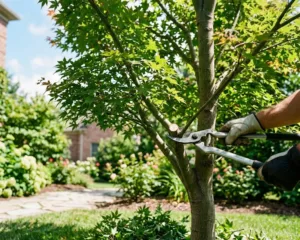
In Florida, you don’t wait for the weather channel to tell you a storm’s coming; you see that bruised purple sky and smell the rain on the pavement. Every homeowner with a sprawling live oak starts looking up, wondering when should trees be pruned before a “gully washer” turns a heavy limb into a rooftop skylight. It’s not about making the yard look pretty for the HOA.
Knuckleheads Tree Service is here to help you build a layer of defense against winds that treat neglected branches like high-velocity projectiles.
Key Takeaways:
- Exploit the winter dormancy window to minimize sap loss and lock out wood-boring beetles that thrive in the heat.
- Eliminate the “sail effect” by thinning internal foliage so 70mph gusts pass through the canopy instead of tipping the root ball.
- Reduce end-weight on heavy horizontal “lever” limbs to prevent structural snapping during a saturated soil event.
- Prioritize strike zones where overhanging branches threaten your roof shingles or the local power drop.
Why Tree Architecture Dictates Storm Survival
Your oaks are anchors, but a thick, un-thinned canopy is basically a massive sail. When the Florida sky opens up and the ground gets “soupy,” a dense tree catches the wind and transfers all that mechanical stress right to the trunk. If that air can’t blow through the branches, the whole tree is coming over, especially in our sandy Lutz soil. Thinning out the interior leads is how you keep the tree standing firm when the rest of the yard is underwater.
Spotting the Red Flags Before the Wind Picks Up
You need to spot the danger signs before the squall hits, not while you’re watching limbs fly from your window. I’m talking about “clackers”—deadwood hanging high up—or deep vertical fissures in the main trunk that suggest the core is rotting out. If you see branches rubbing together, they’re creating open “wounds” that invite fungal decay. Look for those tight V-shaped crotches with included bark; those are your biggest split risks when the wind starts whipping against the heavy wood.
Field Risk Indicators
- Identify brittle, bark-less “widow-makers” that have already detached from the main stem but are snagged in the upper canopy.
- Inspect the main stem for deep vertical splits that indicate the tree’s internal skeleton is failing under its own weight.
- Monitor narrow V-shaped unions that lack the structural “collar” needed to withstand heavy side-loading during a tropical depression.
Boots-on-the-Ground Execution
- Expose the root flare to ensure Lutz’s humidity isn’t trapped against the bark, which leads to slow-motion root strangulation and rot.
- Enforce a strict 10-foot “air gap” between your roof line and any encroaching timber to stop shingle scouring and squirrel access.
The Seasonal Reality: When Should Trees Be Pruned?
Late winter is the heavy-lifting season for tree care because the sap is low and we can see the “bones” of the tree clearly. When the plant is dormant, we can make surgical cuts that seal up fast once the spring push starts, rather than leaving a bleeding wound in the middle of a humid July. Understanding when should trees be pruned is the difference between a tree that thrives and one that spends all its energy fighting off pests in the Florida heat. It’s about timing the cut to the tree’s natural defense cycle.
The Strategic Framework for Storm Readiness
Phase 1: The Hazard Assessment
- Map out every limb that’s currently “aimed” at a target like your house, car, or fence line.
- Flag diseased or “punky” wood that won’t survive a 50mph gust for immediate extraction.
Phase 2: Canopy Thinning
- Select specific internal leads for removal to drop the wind resistance of the entire head without stripping it bare.
- Avoid the “lion’s tailing” amateur move that leaves all the weight swinging at the very tips of the branches like a pendulum.
Phase 3: Structural Weight Reduction
- Shorten long, heavy horizontal runs to pull the center of gravity back over the root flare.
- Utilize “drop-crotch” cuts to steer future growth away from your gutters and power lines.
Managing the Physics of Weight Distribution
Physics doesn’t care about your landscaping goals; gravity is always pulling on those over-extended limbs. When a tropical system dumps inches of rain, that extra weight creates a lever effect that can snap a limb like a matchstick. By getting in there and strategically lightening the load, we ensure the weight stays centered over the root flare. This is why knowing when should trees be pruned is a safety protocol; it makes the entire structure resilient against those sudden, violent gusts we get in Lutz.

Pro-Grade Pruning vs. Amateur “Lopping”
There’s a massive gap between a master craftsman and a guy with a truck and a saw. A pro uses branch collar cuts that work with the tree’s natural healing, while the amateur leaves “stubs” or flush cuts that are basically an open door for decay. We focus on structural integrity and airflow; the DIY crowd just “shortens” stuff until it looks smaller, which usually just triggers a mess of weak regrowth. We use high-tension rigging to lower debris safely, while the amateur “cuts and hopes” gravity doesn’t send a log through your patio. The result of the pro approach is long-term health; the amateur approach just gives you “water sprouts” that grow back twice as fast and twice as brittle.
The Gear That Separates the Pros from the Rookies
We don’t show up with home-store tools and a ladder. To handle tons of wood in tight Lutz residential lots, you need industrial rigging and saws that don’t quit. Whether it’s a 60-foot bucket for high-access work or a stump grinder to chew through subterranean hazards, the gear makes the cut surgical. If you use dull gear or the wrong technique, you’ll rip the bark right off the limb, and that’s a death sentence for a hardwood in this Florida humidity.
- Operate Stihl professional-grade powerheads for clean, high-torque bucking in dense Florida oak.
- Deploy high-tensile arborist rigging lines to “float” heavy timber over your pool or screened-in lanai safely.
- Utilize specialized climbing saddles that let a technician move through the upper canopy without damaging the sensitive cambium layer.
- Process debris with Vermeer chippers to turn hazardous limbs into stable mulch for your garden beds.
Mitigating Risks Near Rooflines and Utility Drops
Any tree hanging over your roof or a utility drop is a “widow-maker” in waiting. During a Florida storm, the wind uses those limbs like a sledgehammer against your siding or, worse, snaps them right into a live wire. We clear these “strike zones” so the wind can move through the yard without taking your power or your shingles with it. We’re not just trimming; we’re clearing the path for the wind to pass through safely.
Expert Perspective: The “Lion’s Tail” Disaster
You’ll see plenty of “landscapers” strip every small branch out of the middle, leaving a heavy puff of leaves at the very end of a long limb. We call that “Lion’s tailing,” and it’s a death sentence in a storm. Without those interior branches to break up the wind’s rhythm and dampen the energy, that long limb just whips back and forth until the wood fatigues and snaps. You want a balanced head, not a “cleaned out” center that acts like a whip.
Walking the Line: Post-Storm Evaluation
Once the rain stops and the clouds break, you’ve got to walk the property line. Look for “hanging snags” in the canopy or soil that looks like it’s “heaving” or cracking at the base. If the ground is soft and the root ball is moving, that tree is an immediate fall risk. Catching those breaks early lets us clean them up with a fresh cut before rot sets in, saving you from a total removal and a massive bill later.
Tactical Recovery
- Inspect for “widow-makers”—those broken branches just waiting for a slight breeze to fall on your driveway.
- Evaluate soil saturation to see if the root system is “bubbling” or shifting after a heavy Florida soak.
- Clean up jagged storm breaks immediately so the tree can seal the wound properly and resist boring insects.
Why You Hire a Craftsman Instead of a DIYer
Master arborists understand the physics of wood under tension—something that catches DIYers off guard every year when a limb “kicks back.” It’s not just about trimming; it’s about reading the biology of the tree to spot beetles or root rot before the trunk goes hollow. We know the exact timing and the precise rigging needed to keep your Lutz sanctuary safe and shaded without the “cut and pray” risks that end in property damage.
Putting Your Tree Strategy into Motion
Keeping a Florida landscape safe takes more than a pair of loppers; it takes a deep understanding of storm physics and tree biology. By sticking to a real pruning schedule, you protect your house’s equity and the people living under your roof.
Knowing exactly when should trees be pruned is your first move toward a storm-hardy yard that can stand up to the Gulf’s worst weather. Give Knuckleheads Tree Service a call at (813) 428-3149 to get a real health audit on your canopy and make sure your trees are ready for whatever the Florida sky throws your way.

Frequently Asked Questions
How often do my trees need a real trim?
Most hardwoods in the Lutz area need a professional look every three to five years. It depends on how fast they’re growing and how close they are to your house. Regular maintenance keeps that heavy deadwood from building up and becoming a projectile.
Can I handle the big limbs myself?
Unless you’ve got the rigging gear and the training, stay off the ladder. High-altitude work involves “wood under tension,” which can snap back or fall in ways you don’t expect. One wrong cut can result in a fatal injury or a log through your roof.
Is pruning going to kill my favorite oak?
If it’s done right, pruning actually adds years to a tree’s life. We remove the diseased sections and balance the weight so the tree isn’t fighting itself. “Topping” a tree might kill it, but strategic thinning is just good medicine.
What do I do if a tree actually hits my house?
Get everyone out of the area first, then call your insurance. Once the site is safe, you call us. We specialize in extraction—getting that heavy timber off your roof without causing more damage than the storm already did.
Does grinding the stump actually matter?
Stumps left in the ground are just hotels for termites and carpenter ants. Eventually, they rot and create a “soft spot” or a sinkhole in your yard. Grinding them down keeps your soil stable and keeps the pests away from your house’s foundation.